Written by Jonathan Wojcik
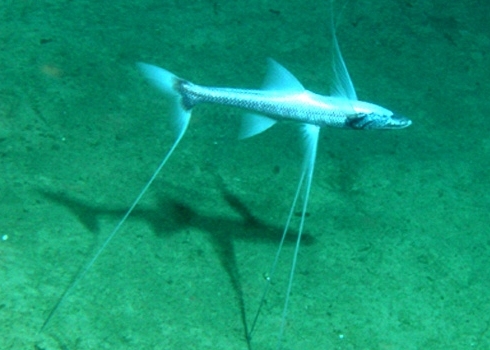
Though its body is little over a foot in length, The eyeless "tripod fish" Bathypterois grallator stands
up to a meter off the sea floor on three fins with incredibly elongated tips. Swimming only
when necessary, it spends most of its time standing in a single spot, eating whatever tiny
creatures may bump into its outstretched front fins - a feeding tactic more commonly seen in
sessile invertebrates, such as anemones, crinoids or barnacles. When a tripod fish does
decide to swim, its "legs" lose their rigidity and trail behind it like soft tails. How the
appendages go from flaccid to stiff is unknown, but perhaps they're pumped with fluid when
the fish wants to rest, not unlike certain other things in nature that can stiffen. Unusually for a vertebrate, tripods are hermaphrodites and capable of self fertilization.
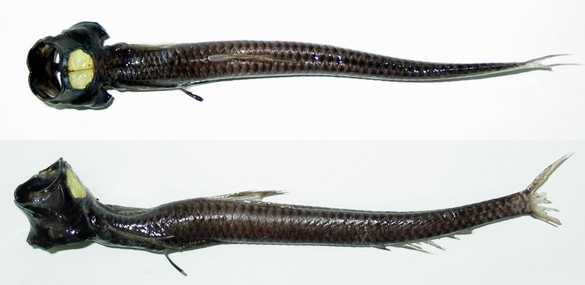
A close relative of the tripod fish lacks its unusual feeding method, but compensates with an
oddity all its own; grideyes have never been observed alive and their habits are largely
unknown, as is the purpose of their incredibly strange sight organs. These flat, grid-like structures
call to mind the eyes of an insect, and emit a vivid glow of unknown function.

|

|

|
|
|
|
|